
Industrial facilities depend on reliable fluid circulation to maintain production efficiency, regulate temperatures and support critical manufacturing processes. Whether it is circulating chilled water through an HVAC system, transferring process fluids or maintaining cooling across industrial equipment, pumping systems play an essential role in plant operations.
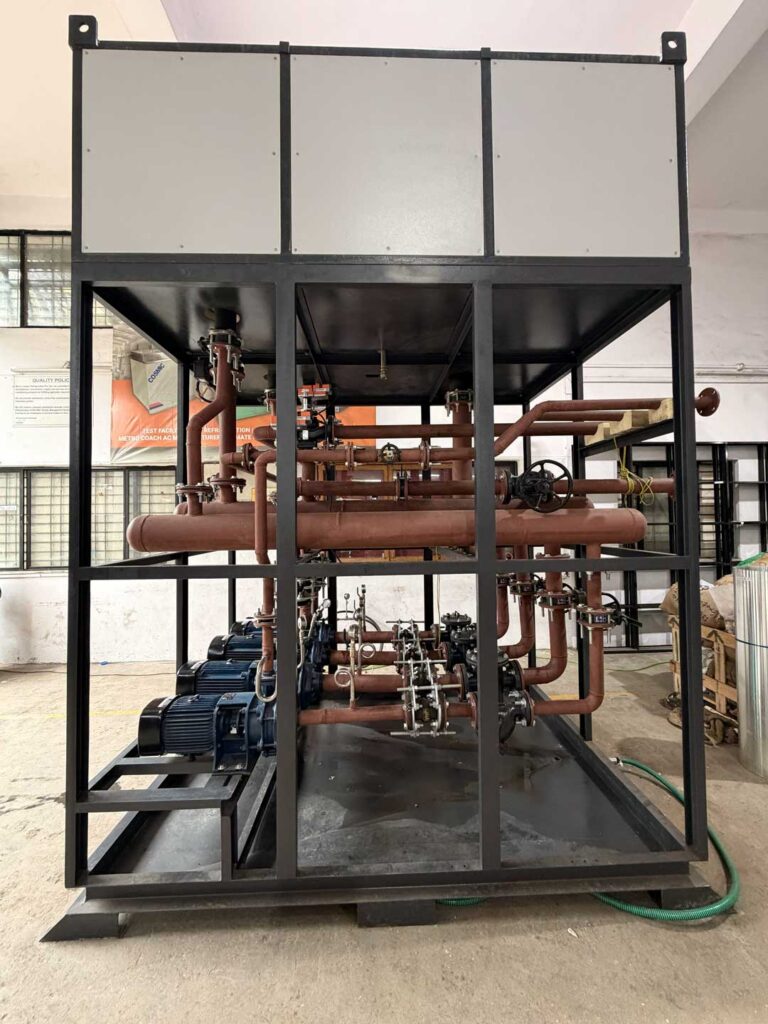
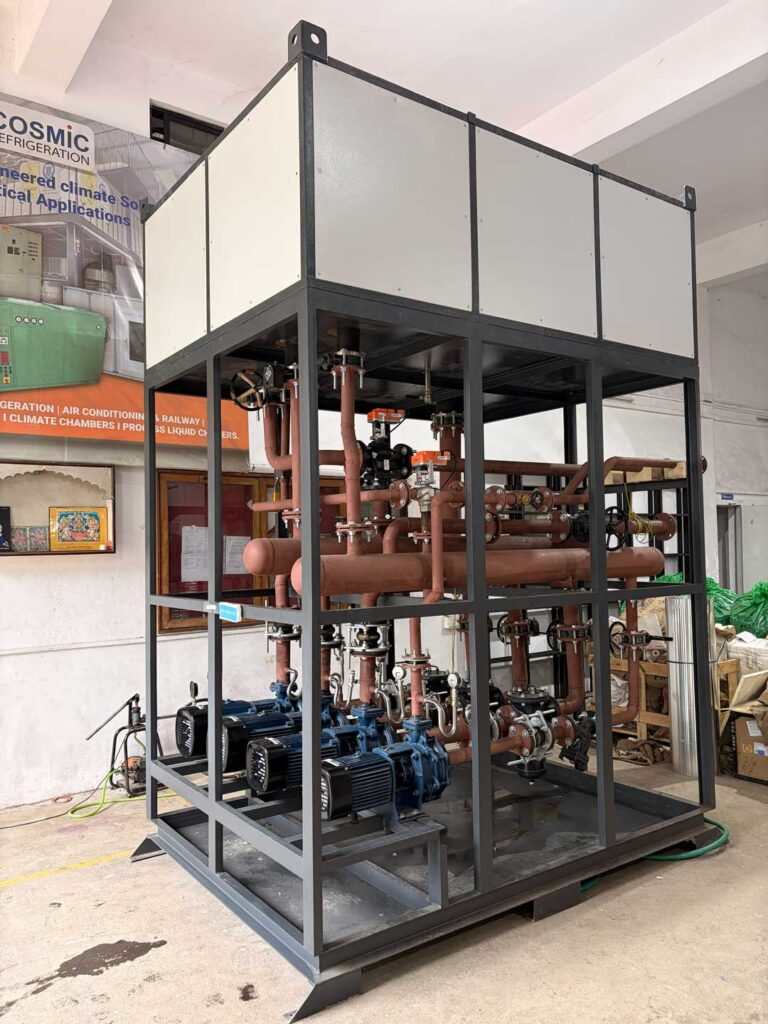
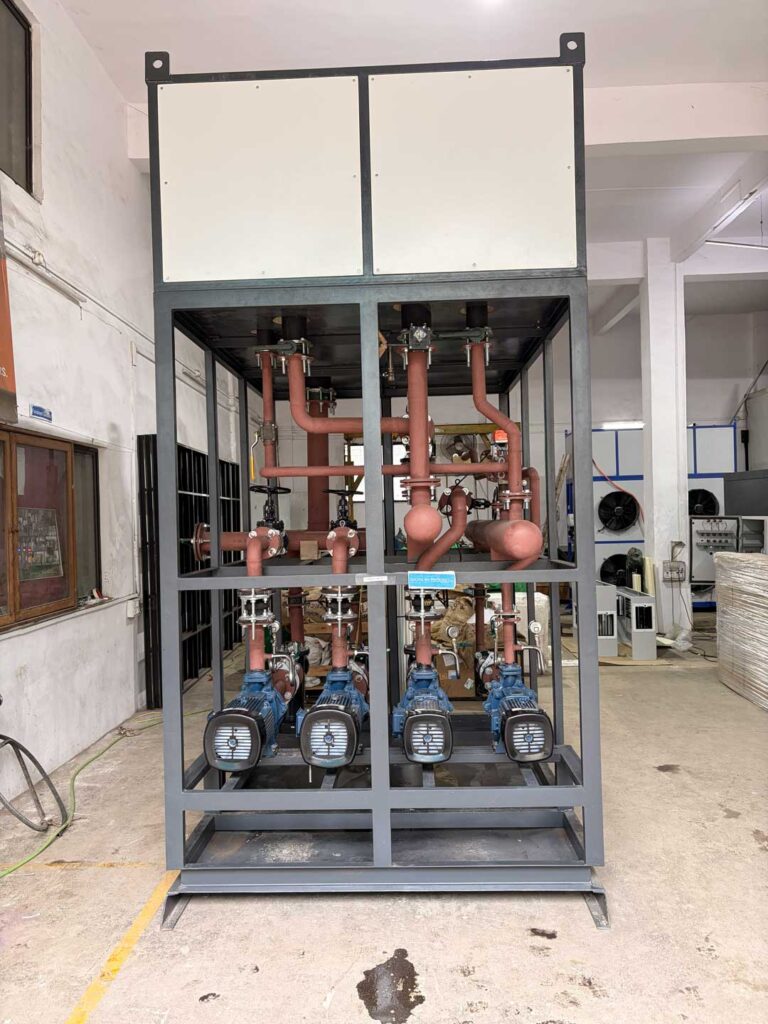
A pump skid is an integrated pumping system in which pumps, motors, piping, valves, instruments and other supporting components are assembled on a common structural frame. Instead of installing individual components separately at the project site, a skid-mounted system brings these elements together as a coordinated package that can be transported, positioned and connected to the facility’s piping and electrical infrastructure.
Pump skid systems are widely used in industrial refrigeration, HVAC, chemical processing, manufacturing, water treatment and other applications where controlled fluid movement is essential.
Understanding how a pump skid works, its components, design considerations and industrial applications helps engineers and facility managers select an appropriate pumping solution for their operational requirements.
What Is a Pump Skid?
A pump skid is a pre-engineered or custom-designed pumping assembly mounted on a rigid structural base frame. It integrates one or more pumps with their associated motors, suction and discharge piping, valves, pressure instruments and control systems into a single installation-ready unit.
The primary purpose of a pump skid is to simplify the installation and operation of industrial pumping systems while ensuring that the different components function together according to the required flow and pressure conditions.
Unlike conventional pump installations, where pumps, piping and accessories may be installed independently at the facility, a skid-mounted pump system allows much of the assembly, alignment and integration work to be completed before the equipment reaches the site.
Depending on the application, pump skids can be designed for water circulation, chilled water distribution, process fluid transfer, chemical handling and other industrial requirements.
The configuration of a pump skid depends on several factors, including the type of fluid being handled, required flow rate, operating pressure, temperature, installation space and process conditions.
How Does an Industrial Pump Skid Work?
An industrial pump skid works by using mechanical energy from an electric motor to move fluid through a connected piping network. The pump creates the pressure difference required to draw fluid through its suction line and deliver it through the discharge line towards the intended application.
The complete operation involves several interconnected stages.
1. Fluid enters through the suction line
The fluid enters the pump through the suction piping, which connects the pump to a storage tank, cooling circuit, reservoir or process equipment. Depending on the system design, suction-side components such as isolation valves and strainers may be installed to control flow and protect the pump.
2. The motor drives the pump
An electric motor supplies mechanical power to the pump through a direct coupling or another suitable drive arrangement. The pump converts this mechanical energy into hydraulic energy.
3. Pressure and flow are generated
Inside the pump, the impeller or pumping mechanism transfers energy to the fluid. In centrifugal pumps, the rotating impeller increases the fluid’s velocity, while the pump casing and associated flow passages convert part of this velocity into pressure.
4. Fluid moves through the discharge line
The pressurised fluid passes through discharge piping, control valves and other supporting components before reaching the required destination. Depending on the application, the fluid may circulate through a heat exchanger, chiller, industrial machine or processing system.
5. Instruments monitor system performance
Pressure gauges, flow meters, temperature sensors and other instruments help operators monitor the operating conditions. Automated controls can regulate pump operation based on system demand, pressure requirements and predefined operating parameters.
The process continues as long as the system requires fluid circulation. In applications with variable demand, variable frequency drives (VFDs) can adjust motor speed to regulate pump output and improve operational efficiency.
Key Components of a Pump Skid System
A pump skid combines mechanical, electrical and instrumentation components into a coordinated assembly. Each component performs a specific function, and its selection depends on the operating requirements of the application.
1. Industrial Pumps
The pump is the primary component responsible for moving fluid through the system. The type of pump selected depends on fluid properties, required flow rate, operating pressure and application requirements.
Common pump types include:
- Centrifugal pumps: Used for transferring water and other compatible fluids in cooling, HVAC and industrial circulation systems.
- Positive displacement pumps: Suitable for applications requiring controlled fluid delivery, particularly when handling viscous fluids.
- Multistage pumps: Used when higher discharge pressure is required.
- Inline pumps: Designed for installation directly within a piping system, commonly used in HVAC and water circulation applications.
2. Electric Motors
Electric motors provide the mechanical power required to operate the pumps. Motor selection considers pump power requirements, operating speed, supply voltage, efficiency and environmental conditions. The motor and pump must be appropriately matched to ensure reliable operation and avoid unnecessary energy consumption.
3. Piping and Manifolds
Piping connects the different components and provides pathways for fluid movement. A pump skid generally includes suction and discharge piping, manifolds, flanges and connecting fittings. Piping dimensions and material selection depend on fluid characteristics, flow velocity, temperature and operating pressure. Proper piping design is important for minimising pressure losses and maintaining stable pump performance.
4. Valves and Fittings
Valves regulate, isolate and control fluid movement throughout the system.
Commonly used valves include:
- Isolation valves: Allow individual components to be disconnected for maintenance.
- Check valves: Prevent reverse flow when the pump stops.
- Control valves: Regulate fluid flow according to process requirements.
- Pressure relief valves: Protect applicable systems against excessive pressure.
The valve arrangement depends on the system’s hydraulic design and safety requirements.
5. Filters and Strainers
Strainers and filters help remove unwanted particles from the fluid before they enter sensitive equipment.
They are particularly important in applications where debris or suspended particles could damage pump components, obstruct heat exchangers or affect the performance of downstream equipment.
6. Instrumentation and Sensors
Instrumentation helps operators understand and monitor the working conditions of the pumping system.
Depending on the design, these may include:
- Pressure gauges and pressure transmitters.
- Flow meters.
- Temperature sensors.
- Differential pressure sensors.
- Level sensors.
- Vibration monitoring devices.
These instruments provide information required for operational monitoring, troubleshooting and system protection.
7. Electrical Control Panel
The control panel manages the electrical operation of the pump skid. It may include motor starters, circuit protection, contactors, variable frequency drives, control relays and automation interfaces. More advanced systems can incorporate PLC-based controls to manage pump sequencing, automatic changeover, pressure regulation and system alarms.
8. Structural Base Frame
The base frame supports the complete assembly and maintains the positioning of pumps, motors, piping and associated equipment. It is generally fabricated from suitable structural metal sections and designed to support the equipment’s weight, operating loads and transportation requirements. Proper alignment, structural rigidity and vibration management are important considerations during skid design.
Different Types of Pump Skid Systems
Pump skids are available in different configurations depending on the application, fluid characteristics and required operating conditions.
Single Pump Skid
A single pump skid consists of one pump and its associated supporting components mounted on a common base frame.
It is suitable for applications where one pump can meet the required flow and pressure conditions. These systems are commonly used for fluid transfer and smaller industrial circulation requirements.
Dual Pump Skid
A dual pump skid incorporates two pumps within the same assembly. Depending on the design, both pumps may operate together or independently.
One common configuration uses a duty pump and a standby pump. The standby pump can take over when the operating pump requires maintenance or experiences a fault.
This arrangement helps improve system availability in applications where uninterrupted fluid circulation is important.
Multi-Pump Skid
Multi-pump skids incorporate multiple pumps connected through common suction and discharge manifolds.
They are designed for applications requiring higher flow capacities, operational flexibility or staged pumping arrangements.
Depending on system requirements, pumps can operate in parallel to increase flow capacity or in series to achieve a higher discharge pressure.
Variable Speed Pump Skid
Variable speed pump skids use VFD-controlled motors to adjust pump speed according to changing system demand.
Instead of operating continuously at a fixed speed, the pump can increase or decrease its output based on pressure, flow or other control parameters.
These systems are particularly useful in HVAC and chilled water applications where cooling demand varies throughout the day.
Industrial Applications of Pump Skid Systems
Pump skid systems are used across several industries because they provide an organised and integrated approach to fluid circulation and transfer.
Their configuration can be adapted to different operating environments, making them suitable for both general utility systems and specialised industrial processes.
1. Industrial Refrigeration and Chilled Water Systems
Pump skids play an important role in industrial refrigeration and process cooling applications.
In chilled water systems, pumps circulate cooled water between chillers and the equipment or process requiring cooling. The pumping system must maintain the required flow rate and pressure to support effective heat transfer.
Depending on the installation, pump skids may be used for:
- Chilled water circulation.
- Secondary cooling water distribution.
- Industrial process cooling loops.
- Heat exchanger circulation.
- Cooling water supply to manufacturing equipment.
Proper pump selection and hydraulic system design help maintain consistent fluid circulation and support the overall performance of industrial cooling systems.
2. HVAC Systems
Commercial and industrial HVAC installations use pumping systems to circulate chilled water and hot water through different parts of a building or facility.
Pump skids can integrate multiple pumps, valves, manifolds and control equipment to simplify hydronic system installation.
They are commonly considered for:
- Chilled water circulation.
- Heating water distribution.
- Primary and secondary pumping arrangements.
- Large industrial air-conditioning installations.
- Cooling and heating water loops.
3. Chemical Processing Industries
Chemical manufacturing facilities require pumping systems capable of handling different process fluids under specific operating conditions.
Pump skid configurations can be designed around fluid compatibility, pressure requirements, temperature conditions and process safety considerations.
Depending on the application, suitable materials, seals and pump configurations must be selected to handle the chemical properties of the fluid.
4. Food and Beverage Processing
Food and beverage manufacturing involves several processes that require controlled fluid movement and temperature management.
Pump skids may be used for water circulation, process fluid transfer, cooling circuits and other utility applications.
For hygienic applications, the equipment and piping materials must be selected according to applicable sanitary and cleaning requirements.
5. Pharmaceutical Manufacturing
Pharmaceutical facilities require carefully controlled manufacturing and utility environments.
Pumping systems support chilled water circulation, equipment cooling and other utility operations. Depending on the process, the design may require specific materials, instrumentation and operating controls.
For critical applications, the pump skid must be integrated with the facility’s overall process and monitoring requirements.
6. Water Treatment and Industrial Utilities
Water treatment facilities and industrial utility systems use pump skids for water transfer, distribution, circulation and pressure boosting.
Depending on the application, these systems can be configured with filtration equipment, multiple pumps, pressure controls and automated operating sequences.
Benefits of Using Skid-Mounted Pump Systems
A properly designed pump skid offers several operational and installation advantages over assembling every component independently at the project site.
Simplified Installation: Since major components are assembled on a common frame, site installation primarily involves positioning the skid and completing the required piping, electrical and utility connections.
Better Component Integration: Pumps, motors, valves, instruments and control equipment are selected and arranged to work together as a coordinated system.
Space-Efficient Arrangement: A well-planned skid layout helps organise equipment within a defined footprint, which can be beneficial in industrial facilities with limited installation space.
Improved Maintenance Accessibility: Components can be positioned to provide access to isolation valves, instruments, motors and pumps, making inspection and maintenance more convenient.
Flexible System Configuration: Pump skids can be designed for different flow requirements, pressure conditions, operating sequences and industrial applications.
Potential Reduction in Site Installation Work: Completing a substantial part of the assembly before delivery can reduce the amount of individual component installation and alignment required at the facility.
These advantages depend on the quality of engineering, fabrication, installation planning and commissioning.
Important Factors to Consider When Selecting a Pump Skid
Selecting the right industrial pump skid requires an understanding of the complete pumping application rather than simply choosing a pump based on its motor capacity.
Engineers should evaluate the following factors before finalising the system configuration.
1. Required Flow Rate
Flow rate refers to the volume of fluid that must pass through the system within a specified period. It is generally expressed in litres per minute (LPM), cubic metres per hour (m³/h) or other suitable units.
The pump must deliver the required flow under actual system operating conditions.
2. Operating Pressure and Total Head
The pump must generate sufficient pressure to overcome static elevation differences and friction losses across the piping, valves, filters and connected equipment.
For pump selection, the total dynamic head (TDH) is an important parameter. It represents the overall head requirement of the system at the intended flow rate.
3. Fluid Properties
The fluid being handled directly influences pump selection and material compatibility.
Important properties include:
- Fluid density and viscosity.
- Operating temperature.
- Chemical composition.
- Presence of suspended solids.
- Corrosive or abrasive characteristics.
These factors help determine the suitable pump type, casing material, impeller material and sealing arrangement.
4. Pump Efficiency and Energy Consumption
Pumps often operate for extended periods in industrial facilities. Therefore, energy efficiency is an important consideration during system design.
Selecting a pump that operates close to its best efficiency point (BEP) under normal operating conditions can help reduce unnecessary energy consumption and mechanical stress.
5. Piping Layout and Pressure Losses
The suction and discharge piping arrangement affects overall pump performance.
Engineers should consider pipe diameter, piping length, fittings, bends, elevation changes and valve arrangements when calculating system pressure losses.
Poorly designed suction piping can also contribute to cavitation and unstable pump operation.
6. Control and Automation Requirements
The required level of automation depends on the application.
Some pump skids use basic manual controls, while others incorporate PLC-based automation, pressure sensors, flow monitoring and VFDs.
For systems with changing operating demand, automated pump sequencing and variable speed control can improve operational flexibility.
7. Installation Space and Maintenance Access
The available installation area determines the skid dimensions, component arrangement and piping connections.
Adequate clearance should be provided for motor removal, pump servicing, valve operation and instrument inspection.
Transportation access, lifting arrangements and foundation requirements should also be considered during the design stage.
Common Pump Skid Problems and Maintenance Considerations
Like other industrial mechanical systems, pump skids require periodic inspection and maintenance to maintain reliable operation.
Some common problems include:
Pump Cavitation: Cavitation occurs when local fluid pressure falls below the fluid’s vapour pressure, causing vapour bubbles to form and subsequently collapse. It can result in noise, vibration, reduced performance and damage to internal pump components.
Excessive Vibration: Misalignment, improper mounting, bearing wear, hydraulic imbalance and other mechanical issues can contribute to excessive vibration.
Insufficient Flow or Pressure: Incorrect pump selection, clogged strainers, air in the system, closed valves or increased system resistance may reduce pumping performance.
Seal Leakage: Mechanical seal wear, improper installation, shaft misalignment or unsuitable operating conditions can lead to fluid leakage.
Motor Overheating: Electrical issues, excessive mechanical loading, poor ventilation or unsuitable operating conditions can cause motor temperature to rise.
A preventive maintenance programme should include checking operating pressure, flow conditions, motor current, vibration levels, bearing condition, mechanical seals, electrical connections and the cleanliness of strainers.
Maintenance intervals should be determined according to equipment manufacturer recommendations, operating conditions and the criticality of the application.
Pump Skid vs Conventional Pump Installation: What Is the Difference?
Both arrangements perform the same fundamental function of moving fluids. The main difference lies in how the pumping equipment is integrated and installed.
| Parameter | Pump Skid System | Conventional Pump Installation |
|---|---|---|
| Equipment arrangement | Components mounted on a common frame | Components installed separately |
| Assembly | Major assembly can be completed off-site | More assembly is generally performed on-site |
| Installation | Delivered as an integrated package | Requires individual component installation |
| Space planning | Predefined skid footprint | Layout determined at the installation site |
| Maintenance | Depends on skid layout and accessibility | Depends on individual equipment arrangement |
| Customisation | Can be engineered for specific applications | Can be configured around site requirements |
A pump skid is often suitable when installation coordination, equipment integration and a defined assembly footprint are important. Conventional installations may offer greater flexibility where the facility has unusual spatial constraints or requires equipment to be distributed across different locations.
The appropriate arrangement depends on project requirements, available space, installation conditions and lifecycle considerations.
Frequently Asked Questions About Pump Skids
1. What is the main purpose of a pump skid?
The main purpose of a pump skid is to integrate pumps, motors, piping, valves, instrumentation and supporting components into a single assembly. This simplifies equipment installation and provides a coordinated solution for industrial fluid circulation or transfer.
2. What are the main components of an industrial pump skid?
The main components include industrial pumps, electric motors, suction and discharge piping, valves, strainers, pressure gauges, flow meters, electrical control panels and a structural base frame. The exact configuration depends on the application.
3. Where are pump skid systems commonly used?
Pump skid systems are used in industrial refrigeration, HVAC installations, chemical processing, pharmaceutical manufacturing, food and beverage processing, water treatment and manufacturing facilities.
4. What is the difference between a pump and a pump skid?
A pump is an individual mechanical device used to move fluids. A pump skid is an integrated assembly that combines one or more pumps with motors, piping, valves, instruments and supporting equipment on a common structural frame.
5. Can pump skids be customised for industrial applications?
Yes. Pump skids can be engineered according to specific flow rates, pressure requirements, fluid characteristics, temperature conditions, installation dimensions and automation requirements.
6. How do I select the right pump skid for my application?
Start by identifying the required flow rate, total dynamic head, fluid properties, operating temperature and system pressure. You should also consider energy efficiency, pump configuration, control requirements, installation space and maintenance accessibility.
7. Are pump skids used in chilled water systems?
Yes. Pump skids can be used in industrial chilled water systems to circulate cooled water between chillers, heat exchangers and process equipment. Their configuration depends on the required flow, pressure and cooling load.
Conclusion
Pump skid systems provide an integrated approach to industrial fluid circulation by bringing pumps, motors, piping, valves and control equipment together into a coordinated assembly. Their flexibility makes them suitable for a wide range of applications, from industrial refrigeration and HVAC installations to manufacturing, chemical processing and water treatment.
However, selecting an appropriate pump skid requires more than choosing the right pump. Hydraulic calculations, fluid compatibility, piping design, control requirements and installation conditions must all be considered to achieve reliable system performance.
For industrial facilities planning cooling system installations or upgrades, understanding the role of pumping equipment is an important part of developing an efficient and dependable solution.
Looking for industrial cooling and refrigeration solutions?
Cosmic Refrigeration Pvt. Ltd. provides custom-engineered industrial refrigeration and HVAC solutions for manufacturing, food processing, pharmaceutical, engineering and other industrial applications. With over 32 years of industry experience, Cosmic focuses on developing cooling systems according to specific operational requirements.
Contact Cosmic Refrigeration to discuss your industrial cooling, process chiller or HVAC project requirements.